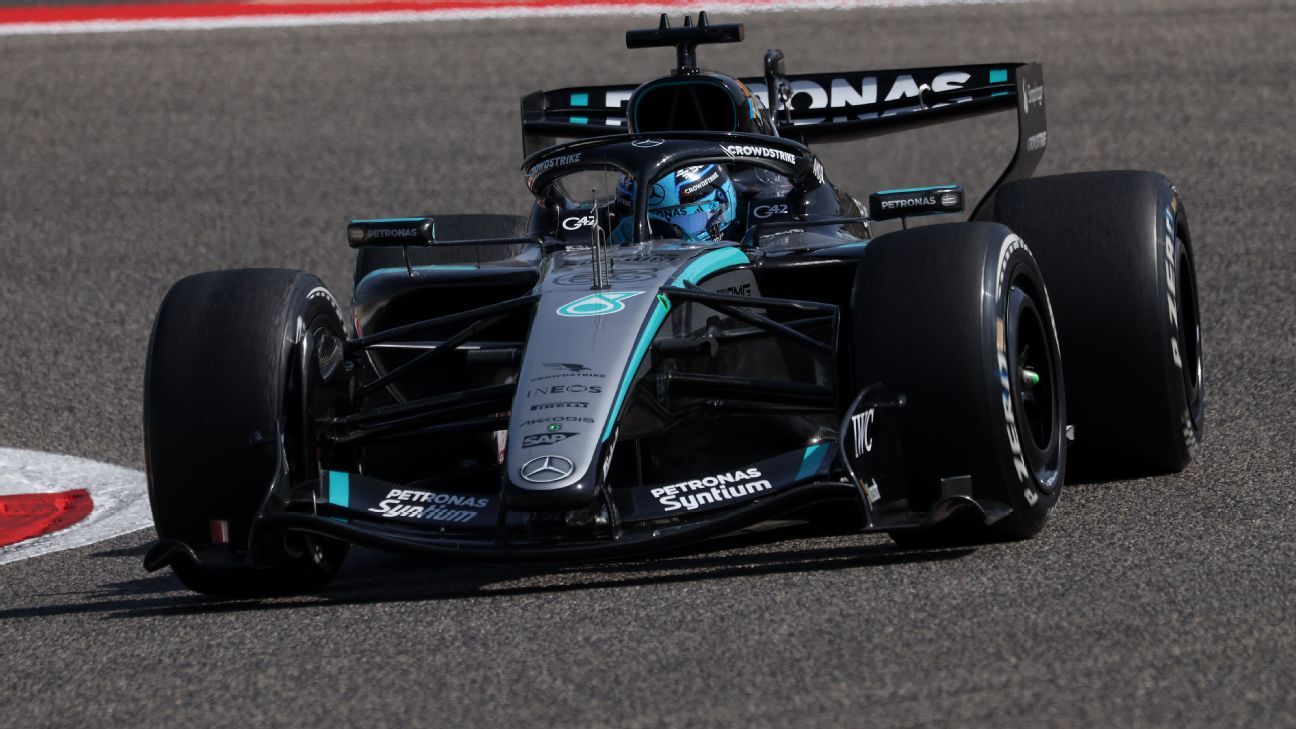
Mercedes vs. Rivals: How F1's Compression Ratio Row Led to New Engine Rules
Formula 1, the pinnacle of motorsport, is a relentless arena where engineering prowess battles for supremacy. Every millisecond, every horsepower, every technical advantage is fiercely pursued. It's no surprise, then, that even a seemingly obscure technical detail can ignite a major controversy, leading to significant changes in the sport's regulations. Such was the case with the recent "compression ratio row" that dominated the offseason discussions, pitting Mercedes against its rivals and ultimately prompting a crucial update to the f1 engine rulebook.
This saga wasn't merely about a number; it was about the very essence of F1 – innovation, competition, and the constant dance between pushing boundaries and adhering to the letter of the law. The unanimous agreement among manufacturers to introduce new engine testing protocols for 2026, stemming from this dispute, highlights the sport's commitment to fairness and the evolving nature of its complex technical landscape.
The Loophole That Sparked a Storm: Mercedes' Ingenuity Under Scrutiny
The controversy began to surface in December, casting a long shadow over the anticipation for F1's all-new 2026 engines. Reports emerged suggesting that Mercedes-AMG High Performance Powertrains, known for their engineering excellence, had identified a potential loophole in the existing f1 engine rules regarding compression ratios. The permissible limit for compression ratio was set at 16:1, a critical specification that dictates how much fuel-air mixture can be squeezed before ignition – directly impacting power output and efficiency.
The crux of the issue lay in the measurement methodology. Current rules stipulated that compression ratio measurements were only taken when the engine was cold. Mercedes' rivals, spearheaded by powerhouses like Red Bull/Ford, Ferrari, Audi, and Honda, raised significant concerns. They suspected that Mercedes had found a clever way, possibly through advanced materials technology or design, to exceed the 16:1 limit when the engine was operational and at its peak temperature, while still passing the cold-condition tests.
This potential advantage, estimated by some to be substantial, ignited a firestorm of politicking and talks. The threat of protests against cars in the opening races of the season, particularly in Australia, loomed large if a solution wasn't found. This period saw multiple meetings between F1's engine manufacturers, F1 itself, and the sport's governing body, the FIA, all striving to find common ground before the new season truly kicked off.
Unpacking the Technical Heartbeat: What is an F1 Compression Ratio?
For the casual fan, terms like "compression ratio" might sound overly technical, but understanding them is key to appreciating the ingenuity and tight regulations within F1. In essence, the compression ratio is the ratio of the volume of the cylinder when the piston is at the bottom of its stroke (maximum volume) to the volume of the cylinder when the piston is at the top of its stroke (minimum volume).
- Why it matters: A higher compression ratio generally means greater thermal efficiency. This translates directly into more power generated from the same amount of fuel and improved fuel economy – both invaluable advantages in F1 where every drop of fuel and every horsepower counts.
- The "Cold vs. Hot" Conundrum: The ingenious (or contentious) aspect of Mercedes' discovery stemmed from material science. Engine components expand when they heat up to their operating temperatures, typically around 130ºC. If certain materials or design choices allowed the internal dimensions of the combustion chamber to subtly change when hot, the *effective* compression ratio could increase beyond the cold-measured limit. This meant an engine could be compliant when measured cold, but potentially non-compliant and more powerful when actually running on track. This distinction formed the very core of the f1 engine rule debate.
The Resolution: A Compromise Forged in Consensus
After intense discussions and several proposed solutions, the FIA announced a breakthrough. Initially, a vote was planned for the introduction of both hot and cold testing from August 1. However, following further talks in Bahrain, a unanimous "compromise solution" was reached and approved by all power-unit manufacturers.
The revised f1 engine rules concerning compression ratio testing will be implemented in two phases:
- Immediate Change (June 1, 2024): From this date, both hot and cold testing of engine compression ratios will be introduced. This provides an immediate safeguard against potential exploits and ensures compliance across operational conditions for the upcoming 2026 engines.
- Future-Proofing (From 2027): For the 2027 season and beyond, the regulations will be further refined. Compression ratios will *only* be measured in operating conditions, specifically at 130ºC. This streamlined approach acknowledges the reality of engine performance on track and removes any ambiguity or potential for loopholes tied to cold measurements.
An FIA spokesperson noted, "The regulations introduced for 2026 represent one of the biggest changes in recent memory. All parties acknowledge that with the introduction of such significant regulatory changes, there are collective learnings to be taken from pre-season testing and the initial rounds of the 2026 championship." This statement underscores the dynamic nature of F1 regulations, where initial rules might need adjustments as new technologies and interpretations emerge.
Beyond the Engine: Broader Implications for F1
The compression ratio row, though seemingly resolved, offers several insights into the broader workings of Formula 1:
- F1 Politicking at its Finest: This episode was a perfect example of F1's inherent political landscape. Mercedes, while doing nothing illegal and passing all required tests, found an advantage. Rivals, fearing a performance deficit, rallied to change the rules. This constant push-and-pull is a testament to the hyper-competitive environment where every advantage, real or perceived, is challenged.
- The Evolving 2026 Regulations: The 2026 engine rules are touted as some of the most radical in F1 history, emphasizing sustainability and increased electrical power. The compression ratio adjustment is just one facet of these massive changes. The FIA spokesperson also mentioned "further evaluation and technical checks on energy management matters are ongoing," indicating that battery charging demands and their impact on racing are also under scrutiny. F1 CEO Stefano Domenicali has urged patience with the new rules, expressing confidence in the racing product but also stating the sport would not hesitate to intervene if action was required.
- Innovation vs. Regulation: This row highlights the eternal cat-and-mouse game between ingenious engineers pushing the boundaries of what's possible and regulators striving to maintain a level playing field. It's this dynamic tension that fuels F1's technological advancement and keeps the sport on the cutting edge.
The resolution of the compression ratio debate is a significant step, ensuring fairness and clarity for the groundbreaking 2026 F1 engines. While the drama surrounding this particular f1 engine rule has subsided, the spirit of innovation, the intensity of competition, and the vigilant oversight of the FIA will undoubtedly continue to shape the future of Formula 1. As the sport moves towards a more sustainable and electrified era, its technical rulebook will remain a living, breathing document, constantly adapting to the relentless pursuit of speed and efficiency.